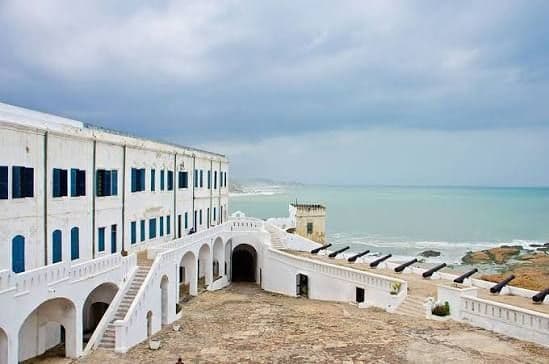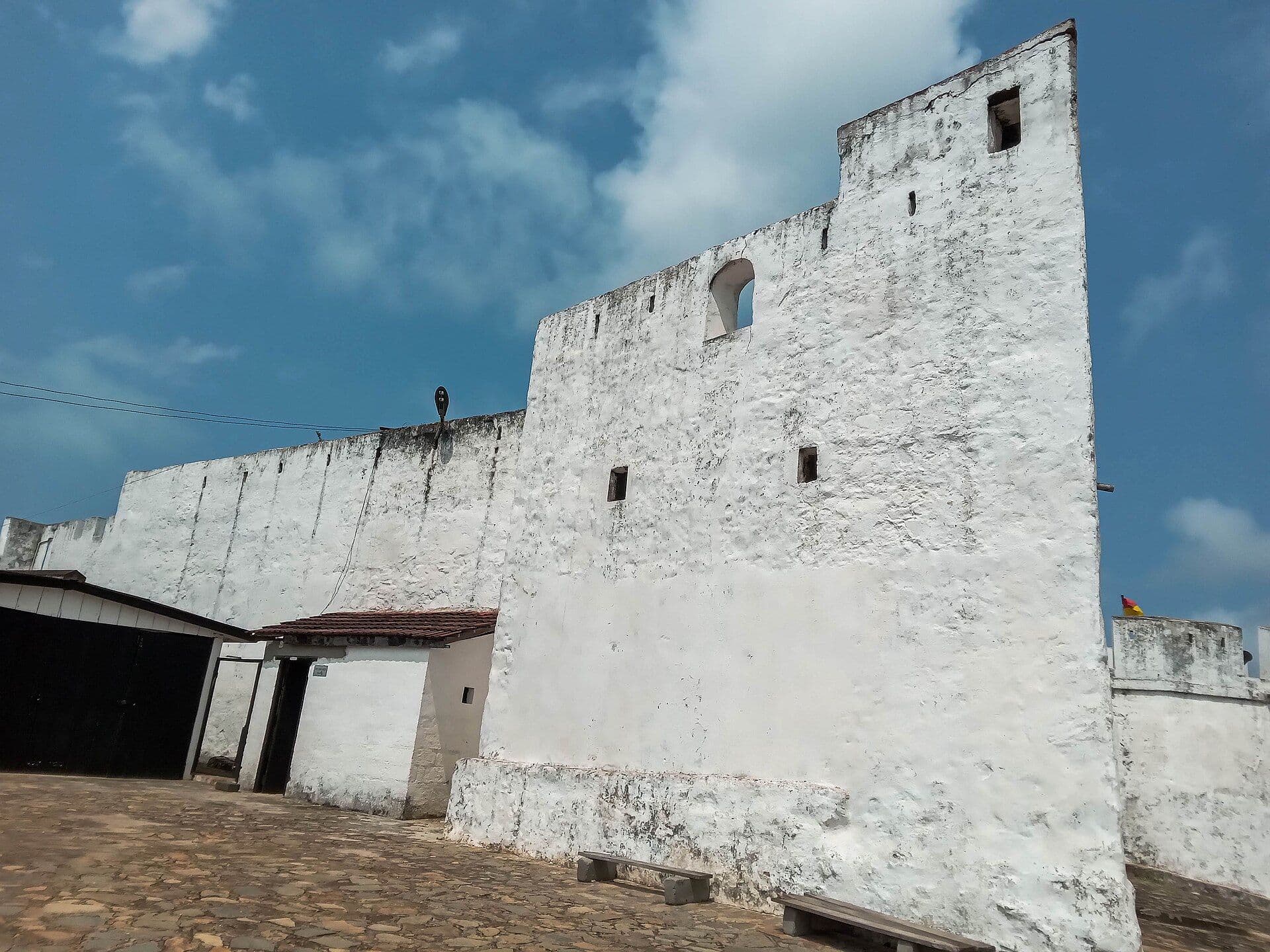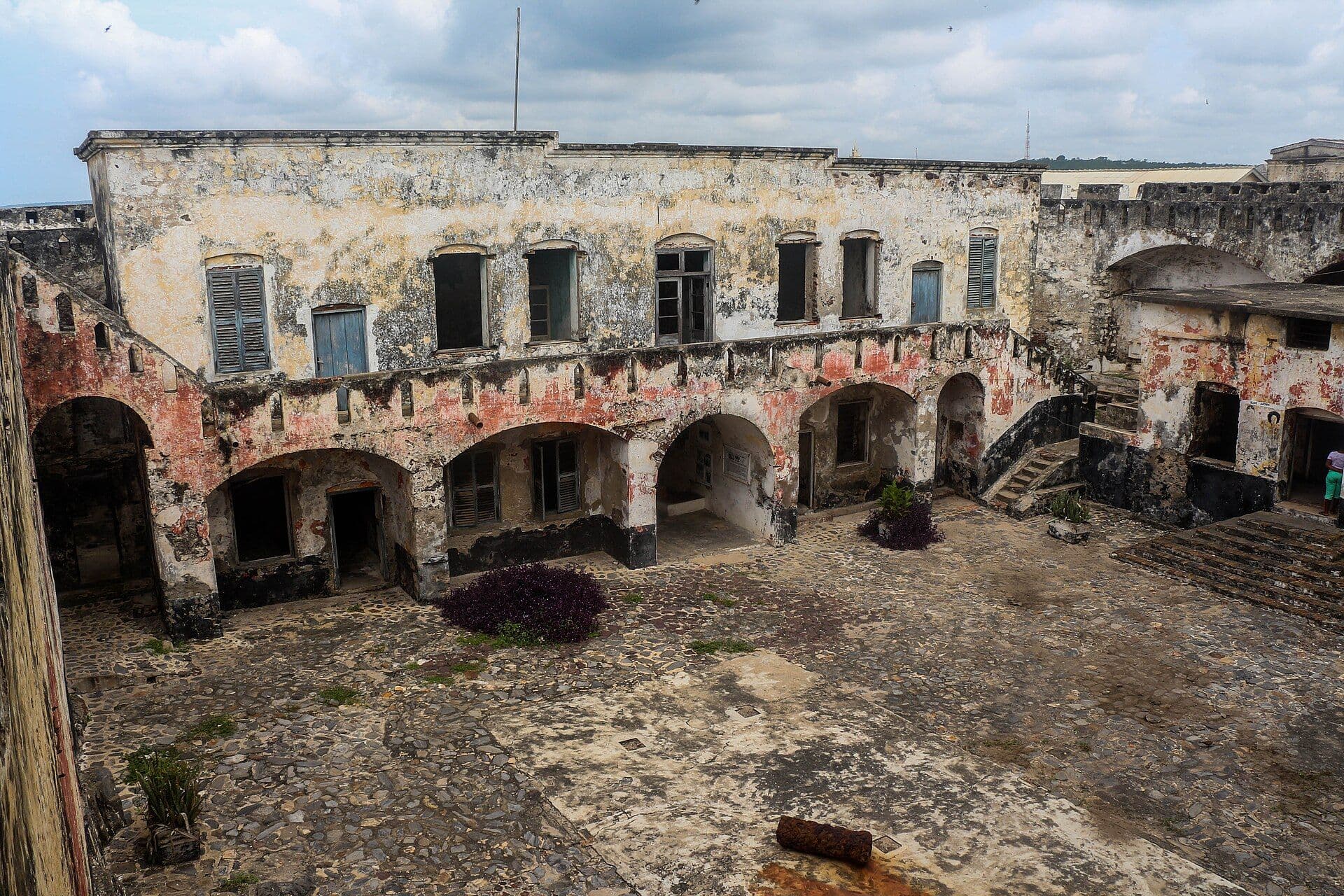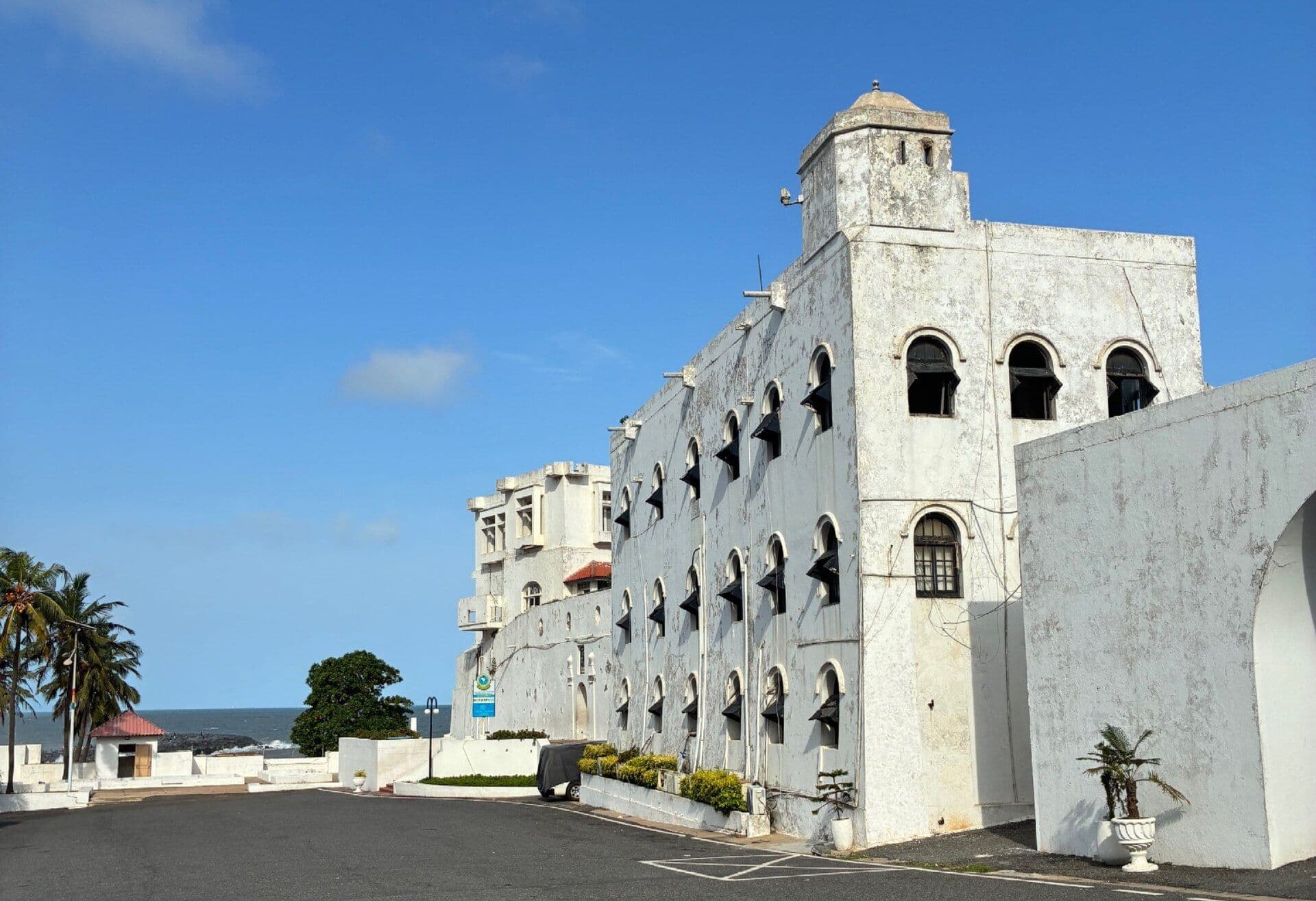
Elmina Castle, built in 1482, is the oldest European building south of the Sahara
Central Region
Photos7
Portuguese-built, Dutch-held and finally British, Elmina Castle sits above a working lagoon harbour thirteen kilometres from Cape Coast.
São Jorge da Mina was raised by Portuguese masons in 1482 with stone shipped from Lisbon, making it the oldest surviving European structure in sub-Saharan Africa. The Dutch took it in 1637 and held it for more than two centuries before ceding it to Britain in 1872.
The castle is entered across a causeway above the Benya Lagoon, where hundreds of painted canoes tie up. Inside, the tour covers the Portuguese church later converted into an auction hall, the courtyards, the dungeons and the governor’s apartments.
Above the town, the smaller Fort St. Jago looks down on the castle and gives the best photograph of the whole harbour. The two can be visited on a single ticket.
Quick facts
- Region
- Central Region
- Nearest town
- Elmina, 13 km west of Cape Coast
- Opening hours
- Daily, 9:00 to 16:30
- Built
- 1482 by Portuguese traders
- Status
- UNESCO World Heritage Site
The full story
The St. George’s Castle Museum is located within St. George’s Castle (often called ‘Elmina Castle’), a fortress in the Central Region. This museum was established in 1996 through the joint efforts of GMMB, the United States Agency for International Development and the Mid-West Universities Consortium for International Activities. The purpose of the museum is to educate the public on the history of St. George’s Castle, as well as to preserve the cultural heritage of the Central Region.
Exhibits include: photographs representing the images of St. George’s Castle across the centuries; displays on the Asantes of Elmina, and on local trading activities with the Europeans; gold weights; shackles; murals; local textiles, stools, stone implements, ceramics, bottles, clay, glass and beads.
The museum provides tours of St. George’s Castle. Visitors may absorb the sights of the former storehouses and slave dungeons, chapels and governor’s chamber. Another scene of interest is the cell where a King of Asante was once held prisoner.
Visitors will also be afforded the opportunity to capture some bird’s eye photographs of the surrounding harbours, fishing boats, and the nearby Fort St Jago, all from the battlements of the four-storey St. George’s Castle.
After a tour of the castle, a chance to rejuvenate is on hand at the museum’s restaurant and bar. A bookstore and a gift shop are also available, and the museum provides visitors with access to a car park. There is an open courtyard for outdoor activities.
The fort in detail
The Portuguese founded Castle “Sao Jorge and Mina” in 1482 to protect the gold-rich lands discovered in 1471. The castle was completed according to its original plan in 1486 and the town was raised to the status of a “city”.
Portuguese navigators carefully selected the castle’s site, because it was strategically located at the end of a narrow promontory bounded on two sides by the Atlantic Ocean and the Benya River or lagoon. Here, in the lee of a low headland, a natural harbour provided sheltered anchorage.
During the 15th and 16th centuries, the Portuguese enjoyed a trade boom in spite of numerous attempts by Castilians and later the French and the English to break the Portuguese trade monopoly.
The Portuguese imported vast quantities of old and new cloths, blankets and linen from Morocco, North European copper and brassware, millions of “manilas” (metal bracelets) and iron kettles and bars in exchange for gold dust and ornaments supplied by Mina. So extensive and popular was the cloth trade that a factor maintained a large shop for old linen c.1500-1507. The commander of the castle wrote to King Manuel in 1503: “Sir, I, Diego d’ Alvarenga, kiss the royal hands of your highness and I report that I have received the old linen.” The import trade raised the issue of porterage, as the natives needed assistance in conveyance of large quantities of European goods into the hinterland and coastlands. To meet this need, the Portuguese initiated, in the early 16th century, the importation of slaves from Benin to Elmina in exchange for gold, ivory, etc. As it turned out, however, the price of gold slumped in Europe in the 16th century due to massive importation of superior gold from Mexico. At the same time, the Portuguese Crown spent vast sums of resources on defensive works, artillery, galleys, warships and convoys related to Mina. Thus weakened, the Portuguese succumbed to Dutch attacks and were dislodged from Elmina in 1637
What to see
- The Portuguese chapel and the Dutch-era courtyards
- The Benya Lagoon causeway and the canoe harbour below
- Fort St. Jago on the hill opposite, included on the joint ticket
- The condemned cell and the memorial plaques
Getting there
- Shared taxis run continuously between Cape Coast and Elmina and take about twenty minutes.
- From Accra allow three and a half hours by road on the N1.
Get directions
Visitor tips
- Combine the castle with an early walk around the fishing harbour.
- Buy the joint ticket if you also want to climb to Fort St. Jago.