Cape Coast Castle: walking the stone corridors where Ghana’s Atlantic story is told
Central Region
Photos16
A UNESCO World Heritage site on the Gulf of Guinea, Cape Coast Castle is the most visited monument on Ghana’s coast and the anchor of every heritage itinerary.
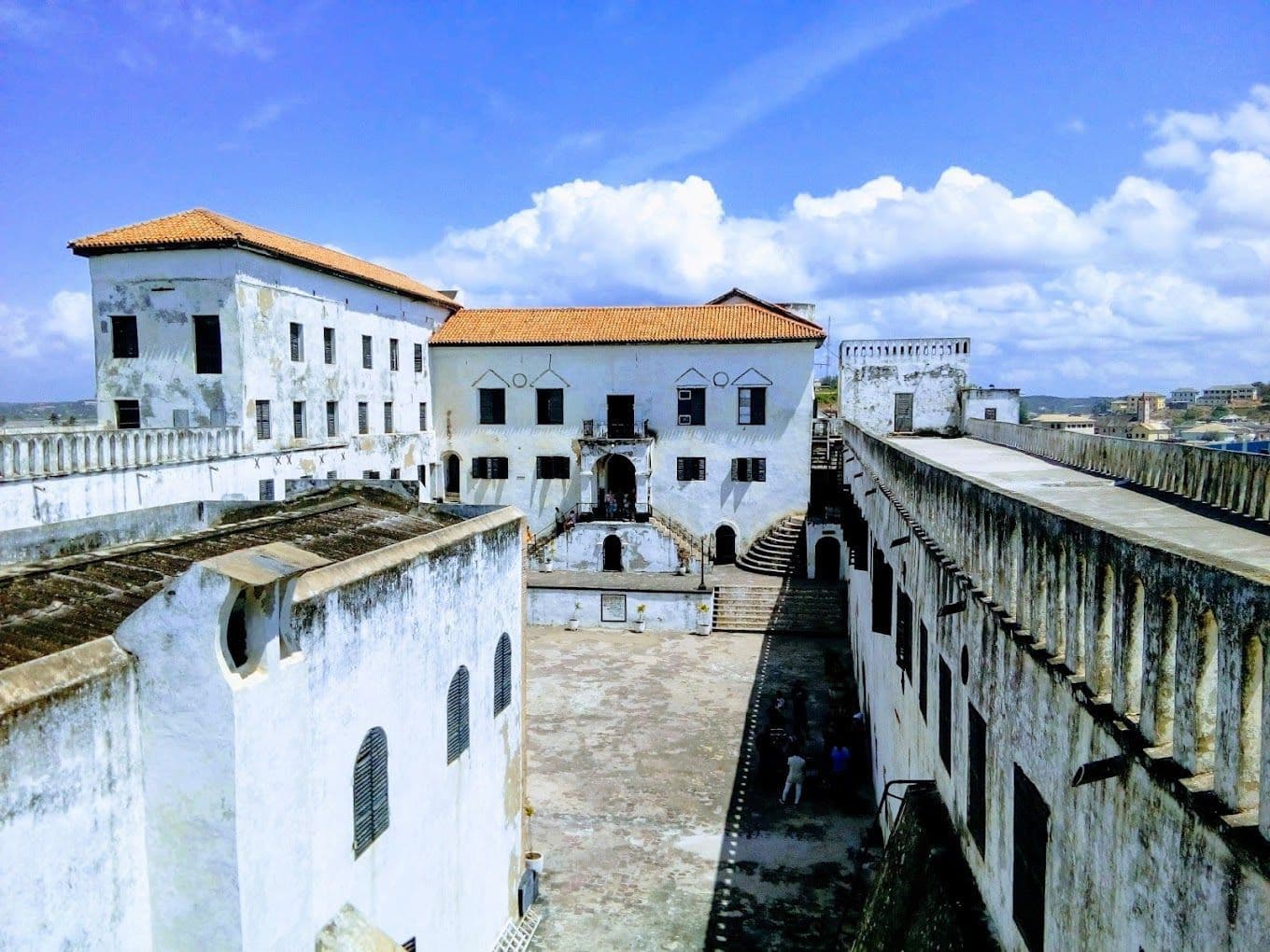
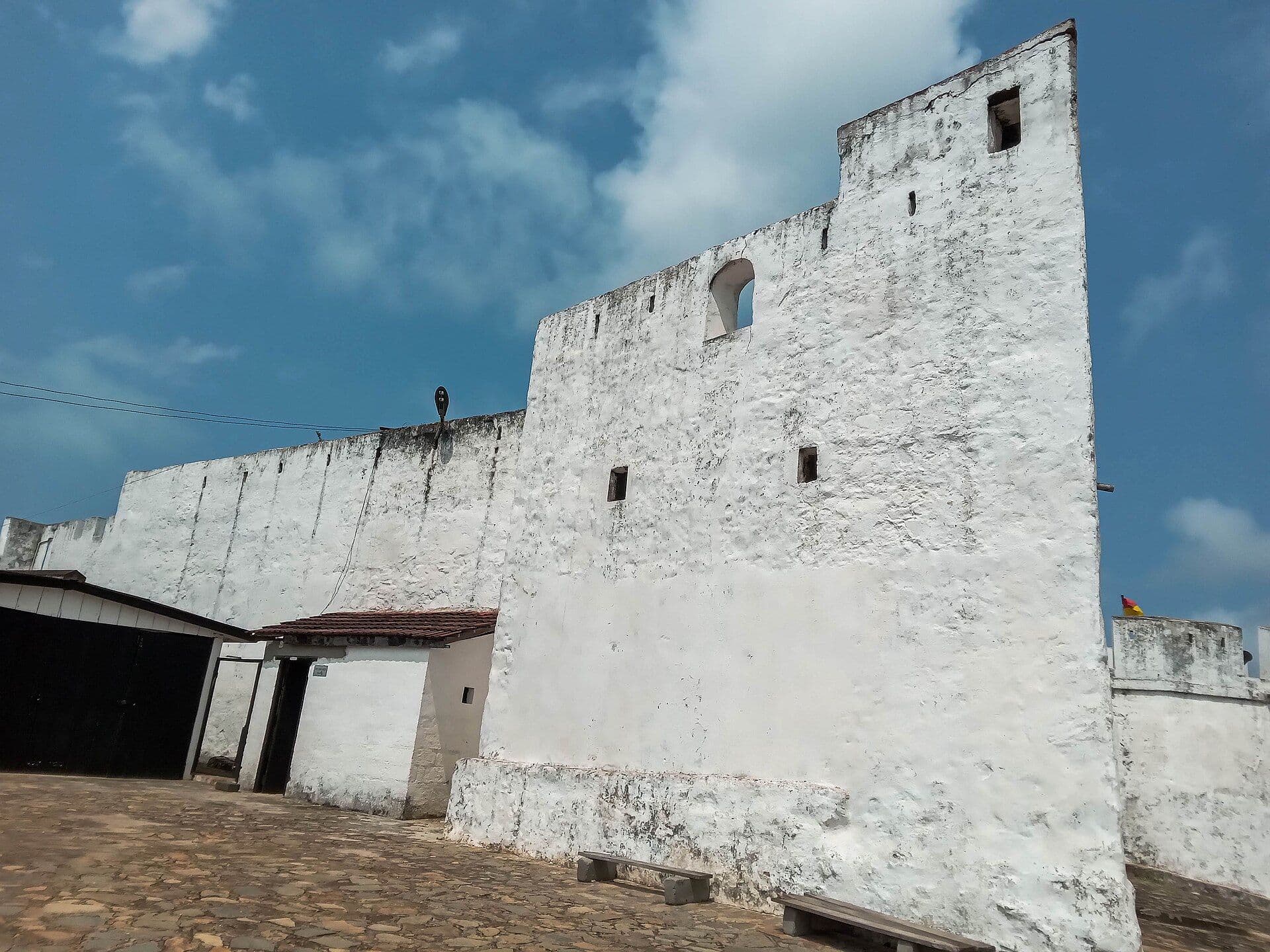
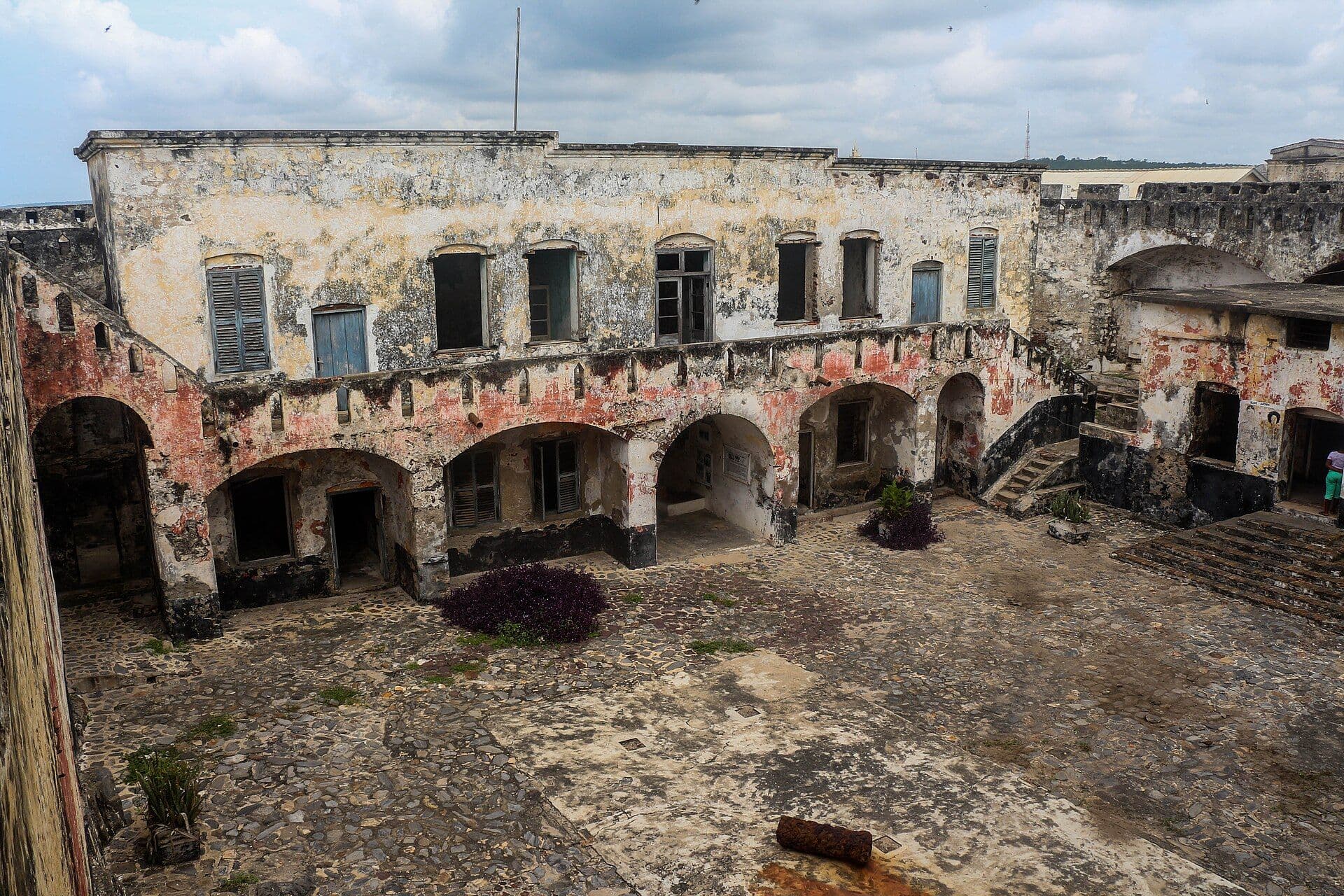
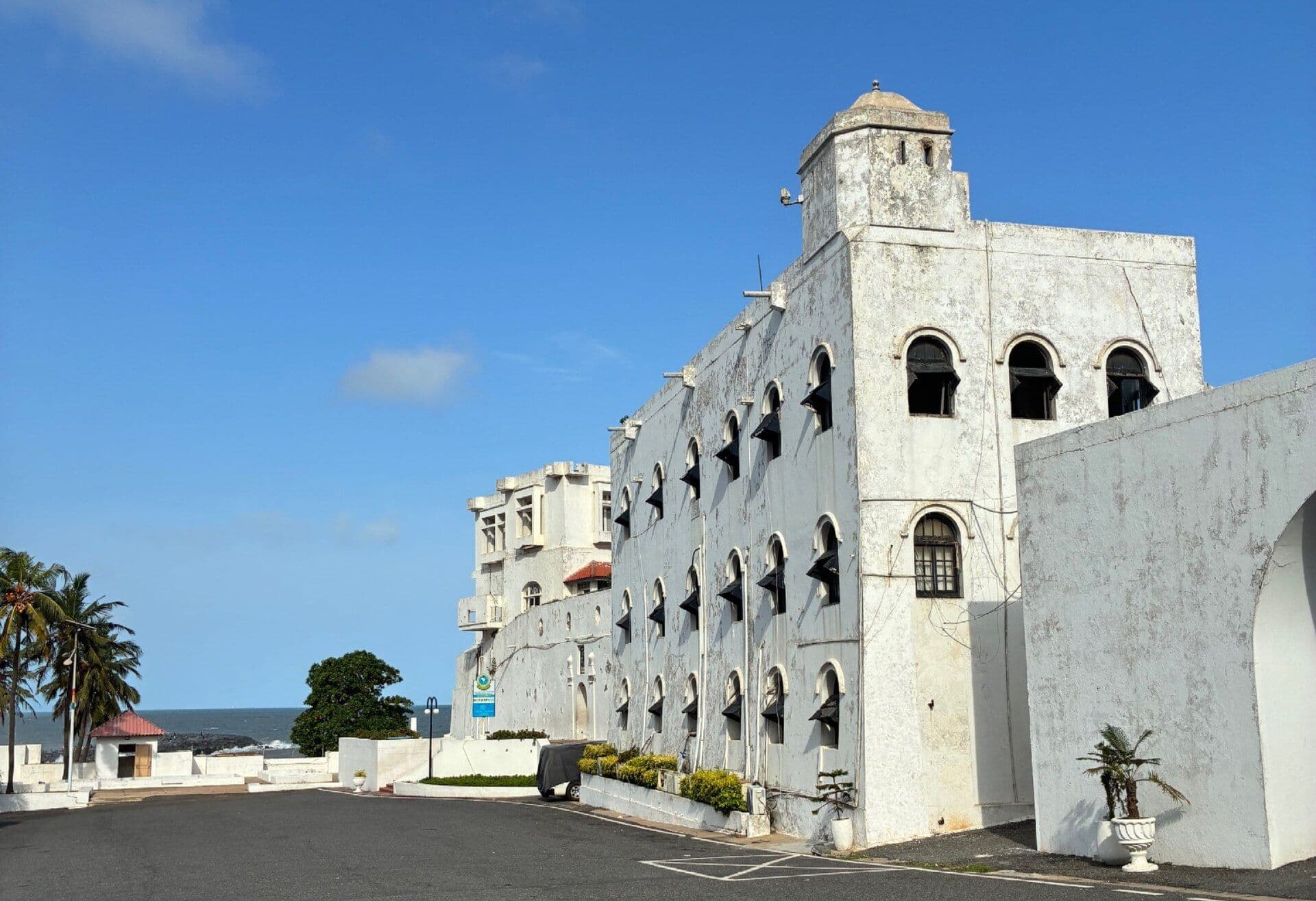
Cape Coast Castle stands on a rocky outcrop above the fishing beach of Cape Coast, its whitewashed walls visible from far along the coast road. Begun by Swedish traders in 1653 as Carolusborg and rebuilt in stone by the British, it became the headquarters of British administration on the Gold Coast for almost two centuries.
Guided tours move through the courtyard, the governor’s quarters, the cannons facing the Atlantic, and then down into the male and female dungeons. The route ends at the Door of No Return, the low doorway through which captives were taken to waiting ships. Guides are trained by the Ghana Museums and Monuments Board and speak from documented history rather than folklore.
A museum on the upper floor covers the Gold Coast trade, Asante diplomacy, abolition and Ghana’s independence, and is worth an unhurried hour on its own. Most visitors combine the castle with Elmina, thirty minutes west, and with Kakum National Park inland.
Quick facts
- Region
- Central Region
- Nearest city
- Cape Coast, 145 km west of Accra
- Opening hours
- Daily, 9:00 to 16:30
- Guided tour
- Roughly 75 minutes, guides on site
- Status
- UNESCO World Heritage Site
The full story
‘Cabo Corso,’ meaning ‘short cape’, is the name the Portuguese settled on for the local settlement within which its trade lodge was built in 1555. Its corruption to ‘Cape Coast’ is now the accepted name of the capital of the Central Region of Ghana. The Swedes, led by Krusenstjerna, however, were the initiators of the permanent structure presently known as Cape Coast Castle. They built a fort in 1653 and named it Carlousburg, after King Charles X of Sweden.
Its proximity to St. George’s Castle (Elmina Castle) and its sheltered beach were all forceful ‘pull factors’ for European nations to the Cape Coast. In addition, the immense viability of the area’s trade implied that the ensuing quest for control led to the Swedes having trouble holding on to their fort. It was captured in turn by the Danes and the local Fetu chief.
Dutch occupation commenced in 1660. Finally, the British fleet, led by Captain Holmes, conquered the fort in 1665 and by 1700, had upgraded it into a castle.
Colonial rivalry between England and France peaked in 1757 during the Seven Years’ War. A French naval squadron bombarded Cape Coast Castle, leaving it badly damaged, and after 1760, the English reconstructed the castle entirely – with more durable materials and an improved sea defence system.
The English retained control of the Castle into the late 19th century. The slave trade was principal until its ban in 1807 by the British, and it ‘is estimated that around 1700, the Royal African Company was exporting some 70,000 slaves per annum to the New World’ . After 1807, trade centred on precious metals, ivory, corn and pepper. In the eighteenth century, the castle’s role altered, as it became the centre of European education in Ghana.
The Cape Coast Castle has served as the West African headquarters of the president of the Committee of Merchants; the seat of the British governor; and a school.
Open to the public, it is currently a historical museum with a Ghanaian arts and crafts gift shop, and it is the regional headquarters of Ghana Museums and Monuments Board.
The fort in detail
The strategic location of Cape Coast having a sheltered beach in proximity to Elmina Castle made it a great attraction to the European nations. Hence, for nearly a century, there was a ding-dong competition among the Portuguese, Dutch, Danes, Swedes and English to gain control of Cape Coast. The Portuguese built the first trade lodge in 1555 and called the local settlement “Cabo Corso”, meaning short cape, later corrupted to Cape Coast. The Swedes, led by Krusenstjerna, built a permanent fort in 1653 and called it Carolus burg after King Charles X of Sweden. During the next 11 years, the Danes, the local Fetu chief and the Dutch each in turn captured and held Carolusburg for a time. Finally, the English fleet led by Captain Holmes took Carolusburg. The fort remained in English hands till the late 19th century serving as the West African headquarters seat of the president of the Committee of Merchants and later as the seat of the British governor.
What to see
- The full dungeon route, including the male and female cells and the condemned cell
- The Door of No Return and the beach-side plaque on the seaward side
- The West African Historical Museum on the upper floor
- Views over the fishing harbour and the canoes drawn up on the sand
Getting there
- From Accra, take the coastal N1 west through Winneba and Mankessim. Private car or chartered van takes about three hours in normal traffic.
- Intercity coaches run from Accra’s Kaneshie and Circle terminals to Cape Coast, then a short taxi ride to the castle gate.
- Most operators run Cape Coast, Elmina and Kakum as a single two-day itinerary with an overnight on the coast.
Get directions
Visitor tips
- Arrive before 11:00 to avoid school groups and the midday heat.
- Photography is allowed in most areas but not in the dungeons.
- Dress respectfully, this is a memorial site as well as a monument.
Videos5
A guided walk through Cape Coast Castle, Central Region
Cape Coast Castle from the Atlantic-facing ramparts